
Understanding how NFL player age impacts fantasy production is key to winning both dynasty and redraft leagues. In this data-driven article, we analyzed Expected Points Added (EPA) for the top 40 players at each position per season — spanning 2014 to 2024 (regular seasons only).
By examining EPA trends by age, we uncovered the true productivity curve for each fantasy-relevant position: quarterback (QB), running back (RB), wide receiver (WR), and tight end (TE).
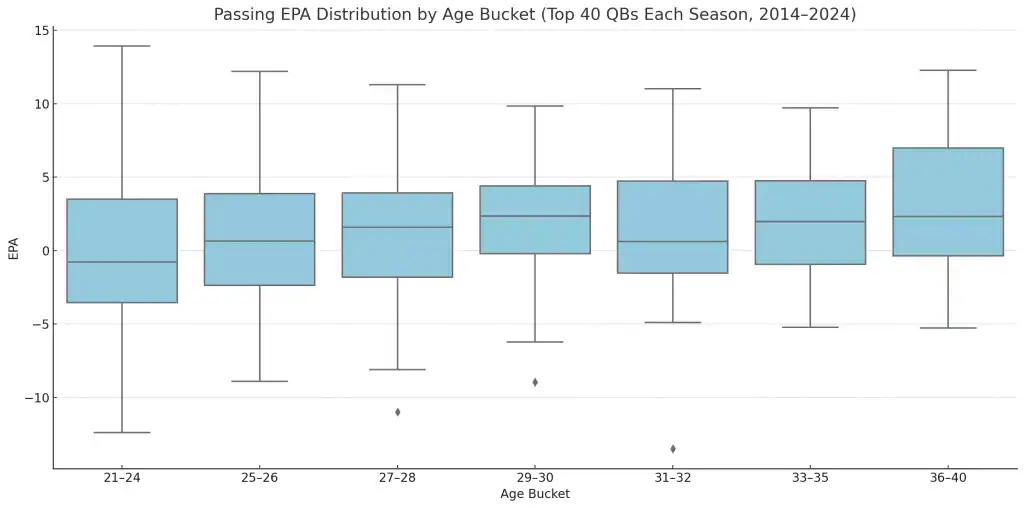
Quarterbacks (QB): The Longevity Kings
Key Insight: Quarterbacks peak later and maintain elite production longer than any other position.
- EPA Trends: Efficiency steadily rises starting around age 25, peaking between 28 and 33. The data shows that even into their mid-to-late 30s, many QBs continue producing strong EPA.
- Veteran Power: Elite quarterbacks like Tom Brady and Aaron Rodgers sustained positive EPA well into their late 30s, showing how experience, scheme familiarity, and rule protection extend their careers.
- Rookie Volatility: Young QBs (21–24) show the greatest variance in performance. Some hit early, but many struggle with negative EPA in their first seasons.
- Fantasy Takeaway: In dynasty, QBs provide the best long-term ROI. In redraft, don’t hesitate to trust proven veterans—especially in high-volume passing offenses.
Running Backs (RB): Flash Firepower with a Short Fuse
Key Insight: RBs peak between ages 25–27, then fade quickly after 28.
- EPA Trends: Rushing EPA climbs steeply in the mid-20s and then plummets post-28. The drop-off is the steepest of any position.
- Youth Inconsistency: RBs aged 21–24 are volatile, often due to limited touches or committee usage.
- Sharp Decline: Post-age 29, EPA drops off hard. Even top-tier producers begin showing reduced efficiency.
- Fantasy Takeaway: In dynasty, sell high before the cliff. In redraft, target RBs in their prime window or volume-heavy roles.

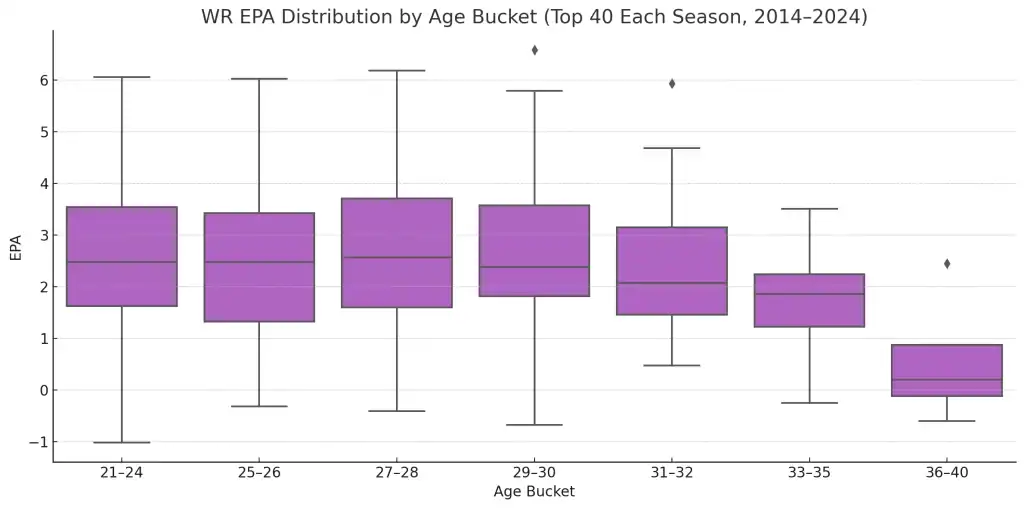
Wide Receivers (WR): Consistent and Durable
Key Insight: WRs have a broad production peak from 26 to 30, with continued value into their early 30s.
- EPA Trends: WRs outperform RBs in longevity and consistency. EPA remains high until age 31–32 before a moderate decline.
- Stable Producers: Veteran receivers often remain top contributors due to route-running, chemistry, and football IQ.
- Fantasy Takeaway: WRs are strong dynasty assets and retain trade value into their early 30s. They are less risky long-term than RBs.
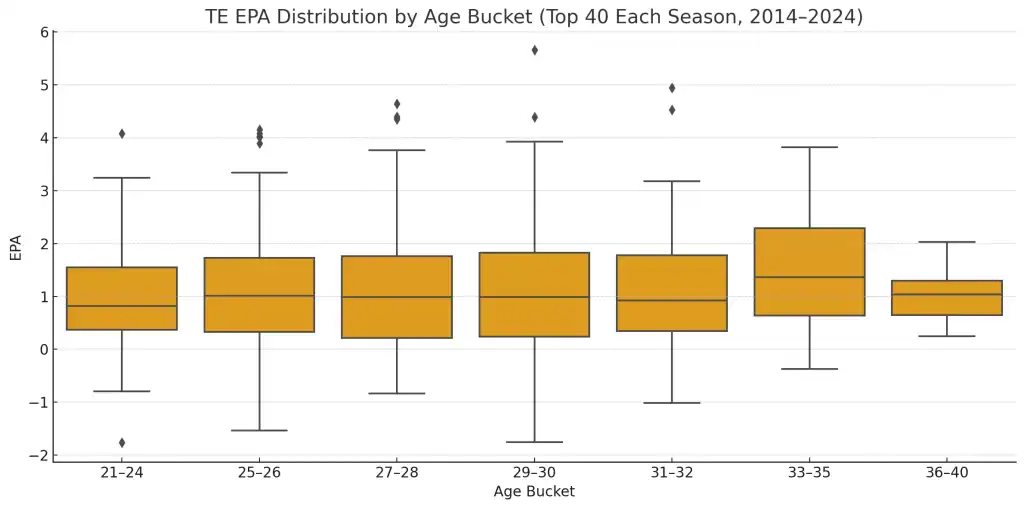
Tight Ends (TE): Late Bloomers with Staying Power
Key Insight: TEs often break out later and retain efficiency through their early 30s.
- EPA Trends: TEs aged 27–30 deliver the highest average receiving EPA. Young TEs (22–25) show inefficiency due to role development and blocking responsibilities.
- Elite Longevity: Once established, TEs can continue strong production into age 32–33.
- Fantasy Takeaway: Be patient with young tight ends. Target veterans entering their late 20s in dynasty leagues.
EPA by Age Comparison: Summary Table
| Position | Peak EPA Age Range | Notable Decline Begins |
|---|---|---|
| QB | 28–33 | After 35 (gradual) |
| RB | 25–27 | After 28 |
| WR | 26–30 | After 31–32 |
| TE | 27–30 | After 31 |
These insights should guide how you:
- Build dynasty rosters
- Prioritize redraft targets
- Handle aging players in trades
- Draft with positional longevity in mind
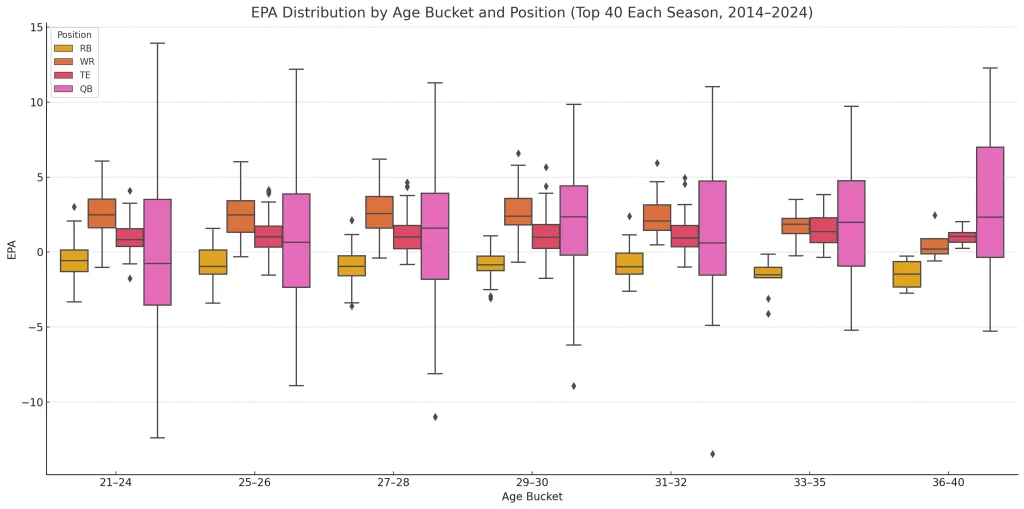
Key Takeaways for Fantasy Football Managers
- QBs offer the best long-term stability in dynasty formats.
- RBs should be treated as short-term assets, traded before their cliff.
- WRs and TEs provide balanced ROI, with WRs being more consistent, and TEs delivering long-term value once developed.
- Avoid rookie hype traps at TE and QB unless the player is in a favorable system and shows strong early traits.
Understanding the EPA age curve by position gives you a powerful edge in every league format.